
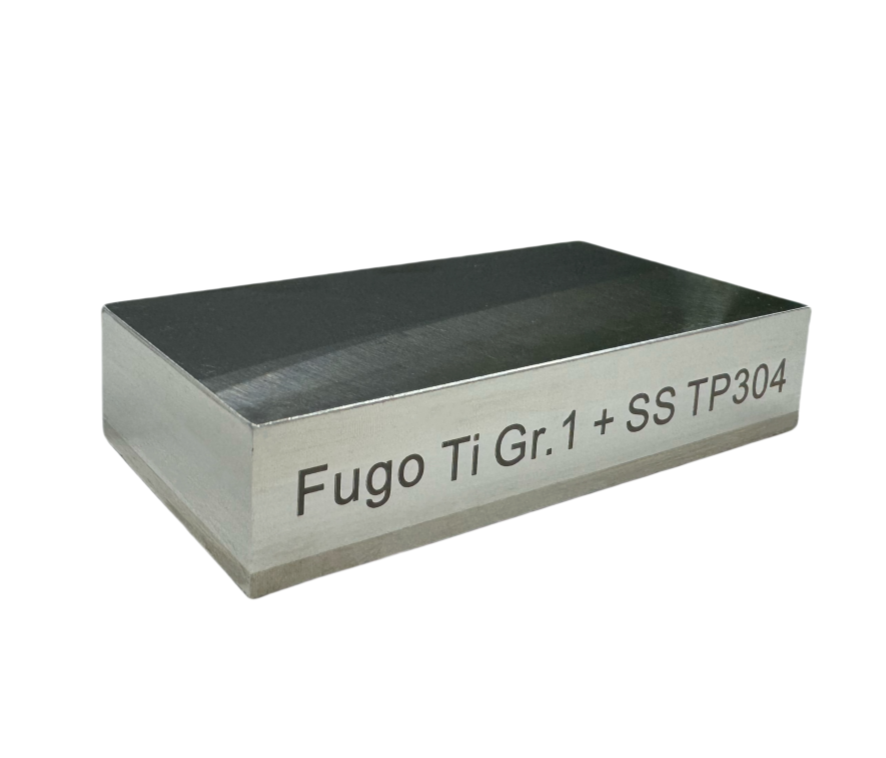
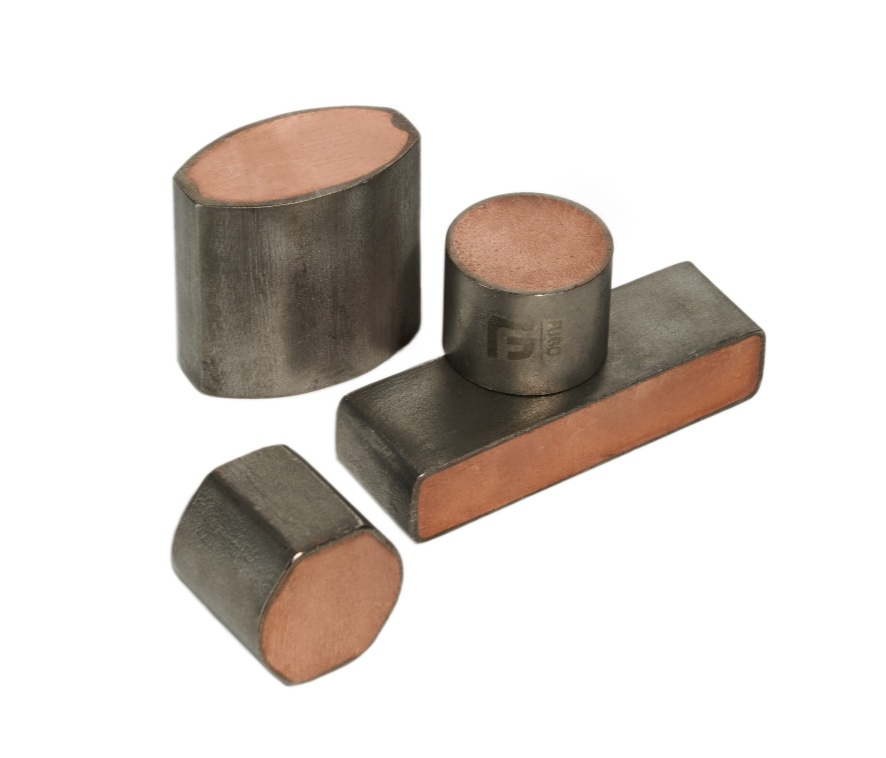


FUGO evaluates clad plate bond quality through appropriate inspection and testing procedures. Ultrasonic testing is used to detect internal defects, voids or unbonded areas within the bonding interface. Mechanical testing evaluates the strength, flexibility and mechanical performance of the plate.The final inspection plan should be agreed according to the applicable standard and project requirements.
To select the appropriate bonding process, FUGO normally requires the following information:
· Base metal and cladding metal grade
· Dimension
· Order quantity
Yes. Explosion-bonded plate can be cut, shaped and fabricated after the bonding process, provided that the plate has received the necessary heat treatment, flattening and quality inspection.
Explosion welding can initially create surface or shape irregularities, so post-bonding hot rolling or mechanical flattening may be used to improve flatness and dimensional accuracy. The forming method should consider the base material, cladding material, total thickness, required shape and final application.
Roll bonding is generally more economical for thinner clad plates, standardized dimensions and larger production quantities because it supports efficient and consistent production.
Explosion welding may be more economical for thick plates, small customized batches, special shapes or material combinations that are difficult to produce through roll bonding. Although explosion bonding may have a higher processing cost, it can provide a practical solution when roll bonding is limited by material compatibility, plate thickness or equipment capacity.
The final cost should be evaluated using the complete specification, including materials, dimensions, quantity, heat treatment, flattening, testing and machining. FUGO can compare available manufacturing routes and recommend a cost-effective solution for the complete project. FUGO clad plate comparison
Not necessarily. Both explosion welding and roll bonding can create a strong metallurgical bond when the materials, surface preparation and production parameters are properly controlled. Explosion welding is particularly effective for thick plates and difficult dissimilar-metal combinations, while roll bonding generally offers better flatness, dimensional consistency and repeatability. The actual bond performance should be evaluated against the required material standard, shear strength, bend performance and service conditions rather than the bonding method alone. FUGO can recommend a suitable process after reviewing your material combination, dimensions and application requirements.
Both processes can be suitable for stainless steel clad plate. Roll bonding is generally preferred for standardized plate sizes, relatively thin cladding layers, larger production quantities and projects requiring tight dimensional tolerances. Explosion welding is often more suitable for thick base plates, thicker cladding layers, special dimensions and smaller customized batches. The final decision should also consider the stainless steel grade, base metal, applicable ASTM or ASME standard, forming requirements, testing requirements and order quantity. FUGO evaluates these factors before recommending the most practical manufacturing route.
The process of cladding materials together can vary depending on the materials involved and their intended application. Common methods include explosion, bonding, explosion bonding.
Fugo Tech offers high-quality clad plates that combine the strength of carbon steel or stainless steel with the corrosion resistance of materials like titanium and nickel alloys, making them ideal for demanding industries like power generation and metal processing.
In power plant desulfurization systems, titanium-steel clad plates serve as corrosion-resistant linings for chimneys exposed to sulfuric acid (H₂SO₄), hydrochloric acid (HCl).The titanium layer provides exceptional corrosion protection, while the steel base ensures structural strength.
Similarly, in hydrometallurgical reactors, Fugo Tech’s clad plates withstand harsh chemical environments and high temperatures. The carbon steel provides strength, and the titanium or nickel cladding resists corrosion from acids and oxidizers, ensuring long-term performance in metal extraction processes.
















Fugo Tech is focused on the manufacturing of clad metal plate and distributes the Stainless Steel, Titanium, Nickel Alloy, Zirconium and other non-ferrous metal pipes, fittings, and flanges.









.png)