


.png)

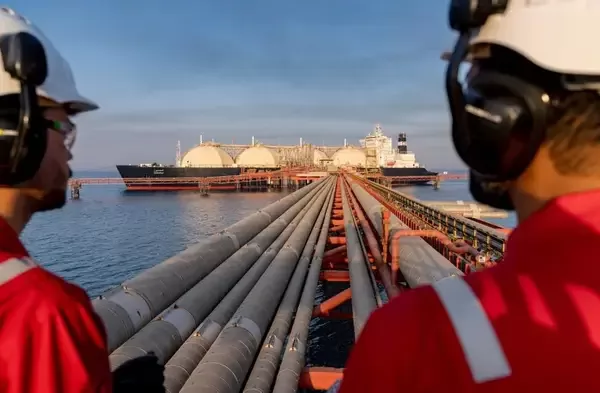
Abu Dhabi National Oil Company’s gas arm, ADNOC Gas, has signed a long-term agreement to supply liquefied natural gas (LNG) to India’s Hindustan Petroleum Corporation Ltd (HPCL) in a deal valued at up to USD 3 billion. The arrangement marks one of ADNOC’s largest bilateral LNG supply commitments to South Asia and reflects growing energy cooperation between the UAE and India.
Under the agreement, ADNOC Gas will ship LNG cargoes to HPCL over a multi-year period, catering to India’s rising demand for cleaner-burning fuels amid its energy transition. While financial details, volumes and delivery schedules have not been fully disclosed, industry sources indicate the deal will underpin incremental growth in ADNOC’s liquefaction and export programme.
ADNOC has been actively expanding its upstream gas production and downstream processing capacity as part of a broader strategy to position the UAE as a leading LNG exporter. Traditionally focused on oil and domestic gas markets, ADNOC over recent years has pivoted toward international LNG supply agreements, targeting growth in key Asian markets such as India, China and Japan.
This agreement with HPCL is part of ADNOC’s push to secure long-term offtake partners ahead of the next phase of its gas infrastructure build-out, which includes enhancements at LNG export facilities in Abu Dhabi and increased capacity on its integrated gas network.
India’s energy market has been an important destination for Middle Eastern LNG, as the country seeks to reduce emissions from coal-fired power generation and meet growing industrial and transportation fuel requirements with gas. HPCL, a state-controlled refiner and energy distributor, has been diversifying its portfolio toward LNG imports and regasification infrastructure to stabilise supply and pricing.
Delivering LNG cargoes under such agreements requires a complex value chain that spans production, processing, liquefaction, storage and shipping. On the production side, ADNOC’s gas fields and processing plants must maintain reliable output, often with demanding technical specifications to handle sour or wet gas streams.
Liquefaction terminals involve large-scale cryogenic facilities, which consist of:
Gas conditioning trains to remove impurities and moisture
Cryogenic heat-exchange systems that cool natural gas to −162 °C
Refrigeration compressors and piping networks
Storage tanks and marine loading arms for LNG carriers
Each of these components is built with stringent material requirements, as LNG equipment must withstand low temperatures and cyclic thermal stresses. This generates demand for specialised alloys, corrosion-resistant steels and precision-fabricated components.
As ADNOC Gas scales up production and export infrastructure, opportunities are emerging for suppliers of high-performance materials and fabricated products. Potential areas of demand include:
LNG plants require metals that retain toughness and resistance at very low temperatures. This typically involves:
Austenitic stainless steels such as 304L and 316L
Nickel alloys (e.g., Inconel, Monel) for heat exchangers and cold box internals
Aluminium alloys for specific heat-transfer systems
Such materials are critical in cryogenic heat exchangers, vapourisers, storage tanks and LNG transfer lines.
In gas processing and conditioning units, clad plates and bimetallic materials offer a cost-effective way to combine strength with corrosion resistance. Applications can include:
Pressure vessels and separators
Dehydration and sweetening units
Amine contactors and absorber columns
By bonding corrosion-resistant alloys (CRAs) such as nickel or duplex stainless steels to carbon steel bases, clad plates help reduce corrosion-induced failures in wet gas environments.
Gas gathering, treatment and export require extensive piping systems. Fabricated items such as:
Custom flanges, elbows and tees
Headers and manifolds
Process skids and structural supports
must meet industry standards (API, ASME) and often feature specialised welding, machining, and corrosion allowance designs.
The deal with HPCL underscores the increasing integration of Middle Eastern gas producers with Asian importers. LNG trade between the Gulf and South Asia is expected to grow as Asian economies transition away from coal and expand their gas markets.
For ADNOC, securing long-term LNG contracts ahead of capacity expansions helps support financing for mega-projects and stabilises offtake risk. For India, partnerships with stable producers such as ADNOC provide predictable supply as it builds out regasification terminals and trucking or pipeline distribution networks.
Nanjing Fugo New Material Tech Co., Ltd. (Fugo Tech) is an ISO 9001 and PED 2014/68/EU certified manufacturer specializing in Clad Material (Explosive Clad Plates & Rolled Clad Plates/Clad Dish Heads/Clad Tube Sheets) and Titanium, Nickel Alloy, Copper Alloy and Stainless Steel products (Pipe/Tube/Fitting/Flange/Forging) which are widely used in the Heat Exchanger, Pressure Vessel, Reactor, Column, Tower, and other process equipment.
Fugo Tech offers different material combinations of Clad Plate (Explosion-welded clad plate/composite plate & Rolled-welded clad plate/composite plate) , and also offers a wide range of materials, including Titanium, Nickel Alloy, Copper, Cu-Ni, and Stainless Steel, along with custom processing services (Tube Sheet drilling, and Dish Head forming) for Oil & Gas, Petrochemical, Chemical, Energy, Paper & Pulp, Marine, Shipbuilding, Environment, Metallurgy, and New Energy Vehicles, with a strong focus on high-performance Clad Plate & Titanium & Nickel Alloy & Stainless Steel solutions.
For any new requirement, please contact: sales@fugo-tech.com

















Fugo Tech is focused on the manufacturing of clad metal plate and distributes the Stainless Steel, Titanium, Nickel Alloy, Zirconium and other non-ferrous metal pipes, fittings, and flanges.