


.png)

A Titanium Clad Plate is an advanced engineered material created by metallurgically bonding a layer of titanium to a substrate—typically carbon steel, stainless steel, or aluminum—using specialized processes. This structure delivers the unparalleled corrosion resistance and performance of titanium, while the backing material provides structural strength and significant cost savings. It is the strategic choice for industries where extreme environments demand premium material properties without the premium price tag.
Titanium Clad Plates are manufactured through robust bonding techniques that ensure a permanent, high-strength interface. The primary methods include:
1. Explosive Cladding
A controlled detonation forces the titanium layer onto the substrate at high velocity, creating a strong metallurgical bond through plastic deformation and atomic diffusion at the interface.
2. Roll Bonding
The titanium and substrate are cleaned, stacked, and heated before being passed through heavy-duty rolling mills under high pressure. This process creates a solid-state weld across the entire interface.
3. Explosive-Roll Bonding Combination
This two-step method first uses explosive cladding for initial bonding, followed by hot rolling to refine the grain structure, enhance bond strength, and achieve precise final dimensions.
4. Vacuum Hot Pressing
The materials are bonded under high temperature and pressure in a vacuum chamber, preventing oxidation and resulting in a very pure, high-integrity bond line.
The selection of the cladding process depends on the material combination, plate thickness, performance requirements, and project economics.
1. Superior Corrosion Resistance
The titanium layer forms an instant, stable, and self-repairing oxide film when exposed to oxygen. This provides exceptional resistance to chlorides (seawater), oxidizing acids, and other aggressive media far beyond the capability of stainless steels, ensuring decades of service life in harsh conditions.
2. Significant Cost Efficiency
By utilizing titanium only as a cladding layer—typically 10-20% of the total thickness—project material costs can be reduced by 30-50% compared to using solid titanium plate, while delivering identical corrosion protection on the process side.
3. Optimal Mechanical Performance
The clad plate design combines the best attributes of both materials: the corrosion resistance of titanium and the structural strength, stiffness, and/or weldability of the substrate (like carbon steel). This results in a high strength-to-weight ratio component.
4. Excellent Thermal Properties
For applications like heat exchangers or reactor vessels, titanium-clad steel offers better thermal conductivity than solid titanium, improving heat transfer efficiency while maintaining full process-side corrosion resistance.
5. Design Flexibility & Safety
Engineers can specify the exact titanium grade (e.g., Gr.1, Gr.2, Gr.7) and thickness required for the corrosive environment, backed by a substrate chosen for pressure containment and mechanical load. The robust bond ensures safety and prevents contamination.
Manufacturing high-quality Titanium Clad Plates requires expertise to overcome specific challenges. The significant difference in thermal expansion coefficients between titanium and steel must be managed during both bonding and subsequent fabrication. Strict control of the bonding atmosphere is crucial to prevent the formation of brittle intermetallic compounds at the interface.
Furthermore, fabrication techniques like cutting, forming, and especially welding require specialized procedures. Welding involves using compatible filler metals for the substrate side with strict argon gas backing on the titanium cladding side to protect the weld zone from oxidation and embrittlement.
Absolutely. Titanium Clad Plates are engineered for maximum reliability in critical applications.
Bond Integrity: The clad interface undergoes rigorous Non-Destructive Testing (NDT), such as ultrasonic inspection, to ensure bond integrity and no delamination.
Performance Proven: Decades of use in offshore platforms, chemical reactors, and power plant scrubbers have proven its long-term durability and safety under stress, pressure, and thermal cycling.
Titanium clad plates are critical in industries that operate under extreme chemical and environmental conditions. Their primary application areas include petrochemical processing, power generation, salt production, and metallurgy. In recent years, their use has expanded significantly into emerging fields such as advanced wastewater treatment and marine engineering.
1.Petrochemical Equipment
In the petrochemical industry, titanium's exceptional corrosion resistance and stability in acidic, alkaline, and saline environments make it indispensable. Titanium clad plates are widely used in key equipment such as distillation columns, reactors, heat exchangers, stabilizer tanks, and condensers.
A notable application is the titanium clad tube sheet in shell-and-tube heat exchangers. These tube sheets, along with cylinders and heads, are fundamental components of corrosion-resistant pressure vessels. For efficiency, these are often fabricated using 2-3 mm thick titanium sheet.
_1764835770_WNo_1057d705.png)
2.Power Generation Equipment
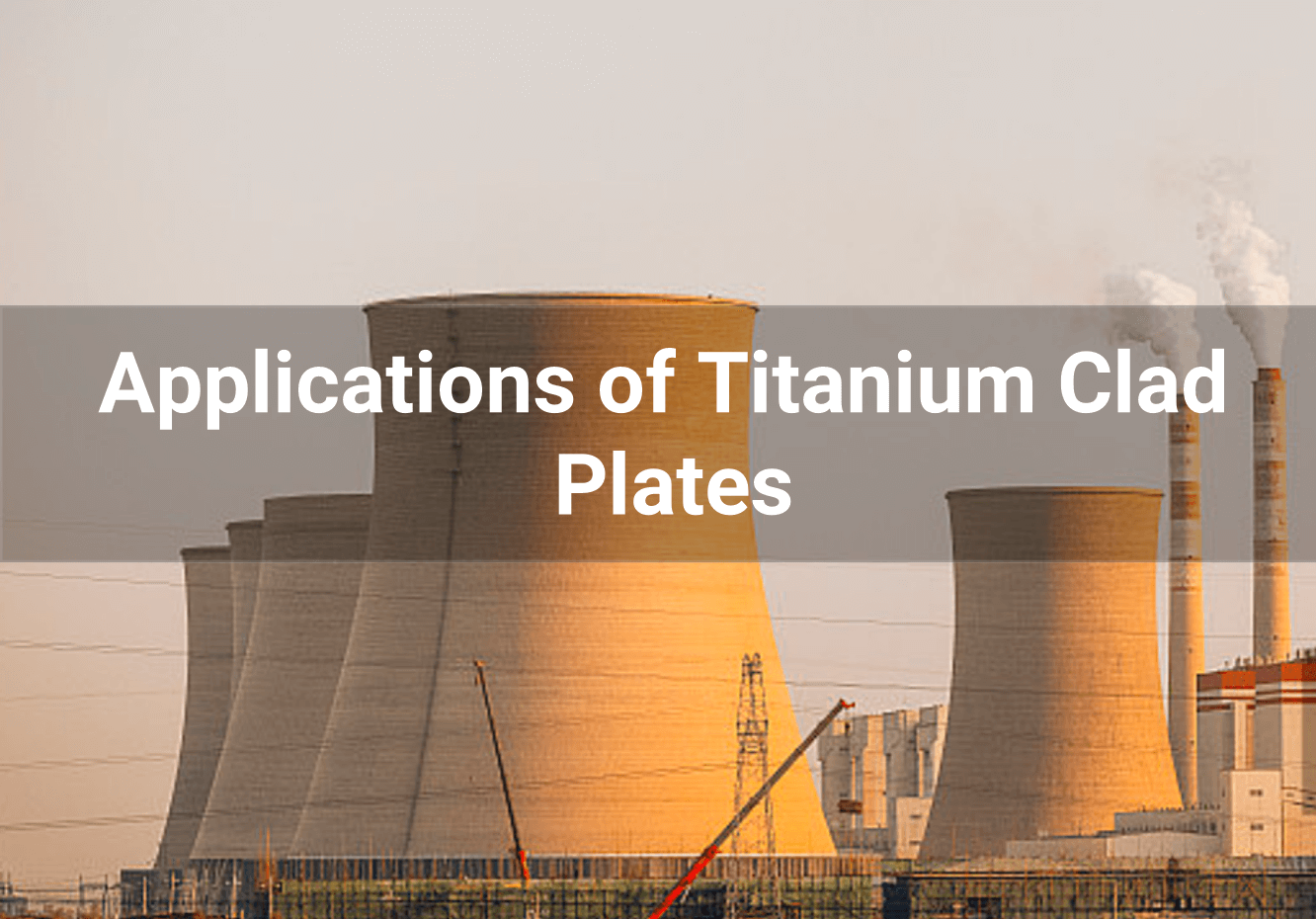
With increasingly stringent environmental regulations, flue gas desulfurization (FGD) systems have become standard in coal-fired power plants. In the widely used limestone wet scrubbing process, the cooled flue gas containing SO₂ and water vapor condenses, forming a highly corrosive liquid on chimney inner walls. Titanium clad plates, prized for their excellent corrosion resistance and cost-effectiveness, have become the material of choice for chimney liners in these systems. They are also extensively used in condensers for both conventional power plants and seawater desalination facilities.
_1764838319_WNo_1057d705.webp)
3.Salt Production Equipment
Titanium's outstanding resistance to seawater, chloride solutions, and fluid erosion makes it the ideal material for evaporator shells in salt production. Its use helps prevent scale buildup on the evaporator walls, dramatically extending intervals between required cleanings and improving operational efficiency.
In metallurgical engineering, titanium clad plates are used in hydrometallurgical processes for pressure acid leaching of materials like cobalt-nickel sulfide concentrate, laterite nickel ore, and precious metal slags. These clad plates are used to manufacture both horizontal and vertical reactors.
_1764835811_WNo_1035d556.png)
5. Marine & Offshore Engineering
For seawater piping systems, ballast tanks, offshore platform components, and desalination plant sections, titanium cladding provides long-term protection against pitting and crevice corrosion in marine environments.
6. Pollution Control & Wastewater Treatment
In advanced wastewater treatment systems, especially those handling industrial effluents with chlorides or other aggressive chemicals, titanium clad components in reactors and tanks offer unmatched durability and contamination-free operation.
Select Titanium Clad Plate when your project faces:
Corrosive environments that cause stainless steel to fail rapidly (e.g., containing chlorides or reducing acids).
Budget constraints that make solid titanium plate prohibitive for large vessels or structures.
The need for a lightweight yet strong material configuration.
A requirement for a non-contaminating, easily cleanable surface in hygienic industries.
It represents the optimal balance of performance, longevity, and life-cycle cost for demanding applications.
Titanium Clad Plate technology successfully bridges the gap between the exceptional properties of pure titanium and practical project economics. It is a mature, proven solution that extends equipment life, reduces maintenance, and enhances safety in the world's most corrosive environments. From protecting chemical plants to enabling deep-sea exploration, titanium cladding continues to be a cornerstone of advanced materials engineering.
Nanjing Fugo New Material Tech Co., Ltd. (Fugo Tech) is an ISO 9001 and PED certified manufacturer specializing in Clad Plates and Machined Components (tube sheet, baffle plate, and dish head).
FUGO delivers tailored clad plate solutions using stainless steel, nickel alloys, titanium, copper, aluminum, zirconium, tantalum, and more—engineered for high-performance & corrosion-critical applications.
Our expertise extends to cutting-edge clad plate supplier capabilities, where we utilize controlled detonation techniques to create seamless molecular bonds between dissimilar metals, ensuring unmatched durability and thermal performance. Beyond plate manufacturing, we offer integrated head forming services, shaping clad materials into precision hemispherical or elliptical heads for pressure vessels and reactors. Pioneering unique material combinations, we also produce titanium clad copper composites that merge titanium's corrosion resistance with copper's superior conductivity, ideal for specialized electrical and marine applications.
For any new requirement, please contact: sales@fugo-tech.com

















Fugo Tech is focused on the manufacturing of clad metal plate and distributes the Stainless Steel, Titanium, Nickel Alloy, Zirconium and other non-ferrous metal pipes, fittings, and flanges.