


.png)

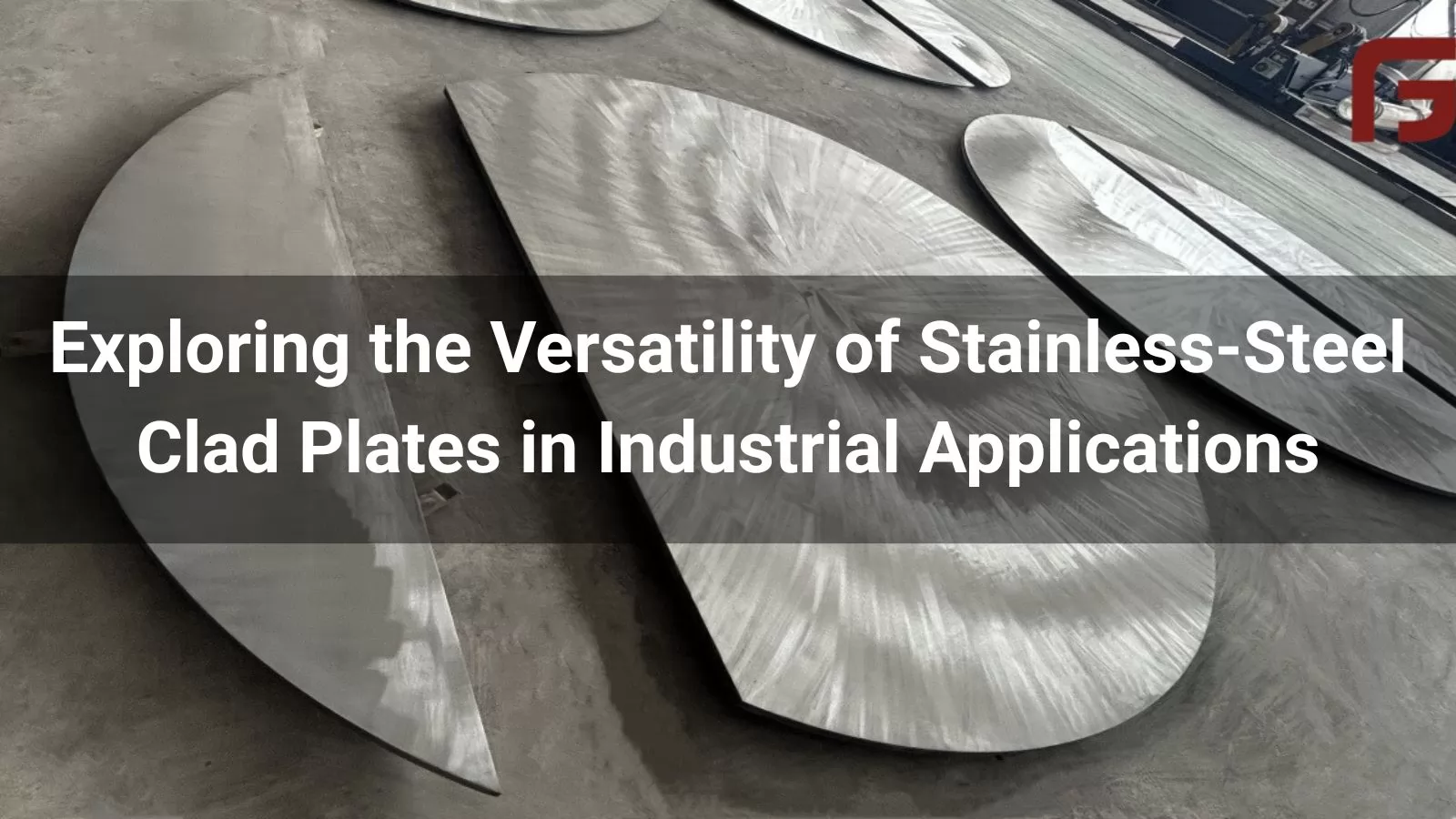
In today’s cost-conscious and performance-driven industrial world, stainless-steel clad plates have become one of the smartest material choices when you need corrosion resistance without paying for 100 % solid stainless or super-austenitic alloy. By explosively or hot-roll bonding a thin layer of high-performance stainless steel or duplex onto a much thicker carbon-steel or low-alloy backer, manufacturers achieve 70–90 % of the performance of solid alloy at only 30–50 % of the cost.
A stainless-steel clad plate is a composite consisting of: ● Backer (substrate): usually carbon steel (SA516 Gr70, Q345R, P355GH) or low-alloy Cr-Mo steel (SA387 Gr11/22) ● Cladding layer: 2–20 mm of corrosion-resistant alloy metallurgically bonded to one or both sides
Bonding methods: explosion bonding (most common for thick plates), hot-roll bonding, or weld overlay (less common for large flat plates).
| Standard | Scope |
|---|---|
| ASTM/ASME A263 / SA-263 | Corrosion-resisting chromium steel clad |
| ASTM/ASME A264 / SA-264 | Stainless chromium-nickel steel clad |
| NB/T 47002.1 (China) | Widely used in Asia-Pacific projects |
| EN 13445, PED 2014/68/EU | European pressure equipment compliance |
Austenitic Stainless Steel 304/304L, 316/316L, 316Ti, 321, 347H, 317/317L, 310S, 904L (N08904), 254SMO (S31254)
Duplex & Super-Duplex S31803 (2205), S32205 (2205), S32750 (2507), S32550 (Ferralium 255)
Nickel Alloys (when stainless isn’t enough) Alloy 625, C-276, C-22, 400, 600, 825
If your required grade is not listed above, most top-tier manufacturers can bond almost any ASME/ASTM-listed alloy.
| Parameter | Range |
|---|---|
| Total thickness | ≥ 8 mm (up to 200 mm possible) |
| Cladding thickness | 2 – 20 mm (3–12 mm most common) |
| Maximum single plate width | 3600 mm (some mills reach 3800 mm) |
| Maximum single plate length | 16,000 mm |
| Maximum area per plate | ~40 m² |
| Maximum weight per plate | ~35 tons |
100 % ultrasonic testing (ASTM A578 Level C or better) and minimum shear strength ≥ 210 MPa are now standard at reputable mills.
In all eight fields, stainless-steel clad plates prove the same powerful principle: use the minimum amount of high-alloy material exactly where it’s needed, and let low-cost carbon steel carry the structural load.
| Factor | Solid Stainless/Duplex | Stainless Clad Plate |
|---|---|---|
| Material cost | 100 % | 30–50 % |
| Weight | High | 30–40 % lighter |
| Weldability | Requires matching filler | Carbon-steel procedures on backer |
| Delivery time | Long for thick plates | Usually faster |
| Corrosion performance | Excellent | Essentially identical |
In 2025, stainless-steel clad plates are no longer a “compromise” material — they are often the optimal engineering solution. When you need proven corrosion resistance, code compliance, and dramatic cost/weight savings, clad plates deliver where solid alloy becomes uneconomical.
Looking for ASME SA-264 316L clad plates for your next pressure vessel? Or super-duplex S32750 cladding for an offshore platform? Most leading mills can supply plates up to 3600 × 16000 mm with 2–20 mm cladding thickness, fully certified and ready for fabrication.
Drop your project details (operating temperature, corrosive medium, design pressure, and required grade) and we’ll help you select the perfect clad specification that meets both performance and budget in 2025 and beyond.

















Fugo Tech is focused on the manufacturing of clad metal plate and distributes the Stainless Steel, Titanium, Nickel Alloy, Zirconium and other non-ferrous metal pipes, fittings, and flanges.