


.png)

_1791429467_WNo_1332d930.webp)
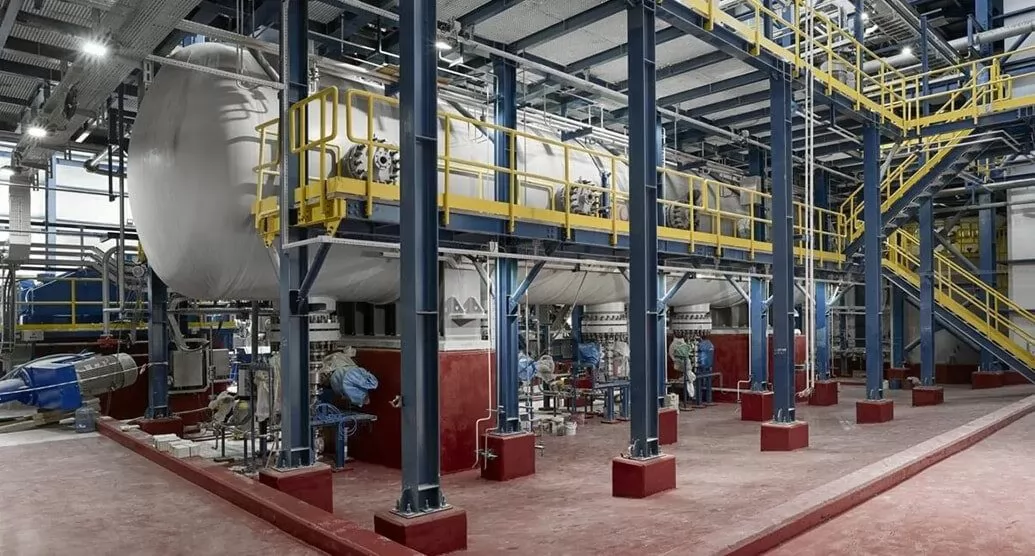
C276-clad wet flue-gas desulfurization system
Nickel alloy clad plate combines a nickel or nickel-alloy working layer with a carbon-steel or low-alloy-steel backing. The cladding faces the process medium and provides the specified corrosion or temperature resistance; the backing supplies most of the structural thickness and pressure-bearing strength. This construction is especially useful for large pressure equipment where a solid high-alloy wall would use far more nickel than the wetted surface requires.
Typical applications include reactor and column shells, pressure-vessel heads, heat-exchanger channels, bonnets and tube sheets, flue-gas ducts, scrubbers, condensers, evaporators and hydrometallurgical autoclaves. The correct cladding grade is determined by the complete service environment,including chemical composition, concentration, temperature, pressure, chlorides, oxidizing or reducing conditions, deposits, cleaning chemistry and fabrication heat treatment.
The following matrix is a practical screening guide for common enquiries.
|
Cladding grade |
Common selection window |
Typical clad equipment |
|
Nickel 200 / N02200 |
Caustic alkali and selected reducing environments at moderate temperature |
Alkali vessels, evaporators, crystallizers, chemical-processing components |
|
Nickel 201 / N02201 |
Low-carbon commercially pure nickel for caustic service where higher-temperature exposure is relevant |
Hot-caustic vessels, evaporator parts, process equipment and heads |
|
Monel 400 / N04400 |
Selected hydrofluoric-acid, alkali and marine duties, subject to full chemistry review |
HF-service vessels, exchanger components, marine process equipment |
|
Alloy 600 / N06600 |
High-temperature oxidation and selected chemical environments |
Hot process vessels, furnace-related equipment, exchanger components |
|
Alloy 625 / N06625 |
Chloride-bearing, sour, marine and aggressive process service requiring a versatile Ni-Cr-Mo alloy |
Separators, scrubbers, reactors, columns, heads and tube sheets |
|
Alloy C22 / N06022 |
Mixed oxidizing and reducing chemical duties with localized-corrosion risk |
Chemical reactors, absorbers, vessels, heads and exchanger parts |
|
Alloy 800 / N08800; 800H / N08810 |
Elevated-temperature process and oxidation service |
Hot vessels, heat-treatment and thermal-process equipment |
|
Alloy 825 / N08825 |
Selected sulfuric- and phosphoric-acid, sour and chemical-processing duties |
Acid vessels, reactors, columns, tanks and exchanger channels |
|
Alloy C276 / N10276 |
Severe chemical, wet-chlorine, chloride and mixed-acid environments |
Reactors, absorbers, FGD sections, columns, evaporators and tube sheets |
UNS N02200 and N02201 are commercially pure nickel grades. Nickel 200 is commonly considered for caustic alkali and selected reducing environments. Nickel 201 has lower carbon and is generally preferred when the nickel layer may see higher-temperature exposure that could make graphitization a concern. In clad construction, these grades are used for process vessels, evaporator components, crystallizers and formed heads where the nickel surface protects a stronger steel backing.
Selection caution. Do not treat Nickel 200 and Nickel 201 as interchangeable. Confirm temperature, concentration, contaminants and the required product specification before fixing the grade.
UNS N04400 (Monel 400) is a nickel-copper alloy commonly evaluated for selected hydrofluoric-acid, alkali, brine and marine duties. Clad plate can be used in vessel shells, heads, exchanger channels and other large wetted components when the corrosion window is confirmed. Because aeration, oxidizing contaminants and galvanic details can change performance, the actual process stream must be reviewed rather than selecting Monel 400 from the acid name alone.
UNS N06600 (Alloy 600) is often associated with high-temperature oxidation resistance and selected chemical-processing conditions. UNS N06625 (Alloy 625) adds molybdenum and niobium to a nickel-chromium base and is widely considered for aggressive chloride-bearing, marine and sour-service environments. Typical Alloy 625 clad components include separators, scrubbers, reactors, columns, exchanger channels, formed heads and heavy tube sheets.
Engineering focus. For oil-and-gas and petrochemical equipment, review H₂S, chlorides, temperature, pressure, water phase, shutdown conditions and weld-overlay or clad-restoration details together.
UNS N08800 and N08810 are selected mainly for elevated-temperature strength and oxidation-related service, while UNS N08825 is more commonly specified for corrosion duties such as selected sulfuric- and phosphoric-acid streams and sour processing. Their similar designation family does not make them substitutes. The equipment designer should define whether the controlling requirement is high-temperature mechanical performance, aqueous corrosion resistance or both.
UNS N06022 and N10276 are high-alloy Ni-Cr-Mo materials considered for demanding chemical environments involving localized corrosion, mixed acids or oxidizing and reducing contaminants. C276 is frequently specified for severe chemical-processing and selected FGD duties; C22 is considered when a broad corrosion window is required. Reactors, absorber sections, evaporators, columns, channels and tube sheets are common clad-component candidates.
Nickel-alloy clad plate is used in distillation and absorption columns, reactors, separators, stabilizers, scrubbers, pressure vessels and condensers that handle corrosive process streams. Alloy 625, Alloy 825, C22 and C276 are frequent starting points for project review because they cover different combinations of chlorides, sour constituents, acids and oxidizing conditions. The clad layer provides the wetted corrosion barrier while pressure-vessel-quality steel supports the wall thickness.
For vessel fabrication, material selection must carry through the complete corrosion boundary: shell, head, nozzle, manway, internal attachment and weld-restoration details. Leaving carbon steel exposed at a nozzle or attachment can defeat the purpose of the clad shell. Forming strain, post-weld heat treatment and the final cladding allowance should be defined before plate production.
Shell-and-tube heat exchangers are one of the clearest uses for nickel-alloy cladding. A thick steel tube sheet provides rigidity and ligament strength, while the nickel-alloy face protects the channel-side wetted surface. Channels, bonnets, covers and divider plates may use the same corrosion-resistant alloy so the entire process side has a compatible material system.
Tube-sheet design must account for drilling allowance, cladding thickness after machining, tube-to-tube-sheet joint type, weld preparation and bond-interface position. We also provide tube-sheet drilling and machining services, allowing clad material supply and downstream machining requirements to be coordinated for the exchanger design.
Explore our tube sheet drilling service for the related machining capability.
Wet flue gas desulfurization creates a variable corrosion environment involving condensate, sulfur species, halides, deposits and erosion. Nickel-alloy clad plate may be considered for absorber sections, chimney liners, ducts, reactor linings and other areas where localized corrosion and mechanical loading must be controlled. C-625, C-276 and other corrosion-resistant nickel alloys are among the cladding options used in FGD systems.
The material decision should use actual fuel and water chemistry, chloride and fluoride content, temperature profile, wash-down conditions and expected deposits. Life-cycle cost matters because difficult-to-access ducts and chimney sections can be expensive to repair even when the initial lining cost is lower.
Learn more: Nickel Clad Plate & Titanium Clad Plate in Flue Gas Desulfurization Systems
Hydrometallurgical plants use aggressive leaching environments to process laterite nickel ore, cobalt-nickel concentrates and other valuable-metal feedstocks. Nickel-alloy clad plate is used in horizontal and vertical reactors, autoclaves, flash vessels and associated pressure equipment where a corrosion-resistant interior must be combined with a thick, high-strength shell.
High pressure, elevated temperature, solids, slurry velocity and acid chemistry make this a system-level materials problem. The cladding grade, weld restoration, nozzle design, agitation or slurry wear zones and inspection access should be reviewed together. Local wear or damage must not expose the steel backing to the process medium.
Marine and offshore. Alloy 625 and Monel 400 are commonly evaluated for selected seawater, splash-zone and marine process duties. Crevices, oxygen level, flow and galvanic couples remain decisive.
Desalination and condensers. Nickel-alloy clad channels, bonnets, tube sheets and covers can be used where the exchanger design requires a corrosion-resistant process-side surface over a thick steel section.
Pharmaceutical and fine chemicals. C22, C276 and other high-nickel alloys may be considered for reactors, mixers and storage equipment handling aggressive chemicals or cleaning media, subject to surface-finish and contamination requirements.
Fertilizer and acid processing. Alloy 825, C22, C276 and project-specific alloys may be selected for acid vessels, absorbers, evaporators and related equipment after process-specific corrosion review.
Nickel and nickel-base-alloy clad steel plate is commonly specified to ASTM/ASME A/SA-265 or another project standard. NB/T 47002.2 is also used for nickel-steel clad plate in pressure-vessel service. The purchase specification should define base material, cladding grade, thicknesses, heat-treatment condition, dimensional tolerances, bond-quality acceptance and required testing.
|
Parameter |
Typical available range |
|
Total thickness |
8 mm and above |
|
Cladding thickness |
2-16 mm |
|
Maximum width |
3,600 mm |
|
Maximum length |
16,000 mm |
|
Maximum plate area |
50 m² |
|
Maximum plate weight |
35 t |
These figures describe our general nickel-cladding capability. Final feasibility depends on the exact alloy, plate combination, thickness ratio, heat-treatment route, flatness requirement, testing level and production schedule.
We supply nickel and nickel-alloy clad plate for pressure vessels, reactors, columns, shell-and-tube heat exchangers, tube sheets, evaporators, condensers, FGD equipment and metallurgical process equipment. Related processing services include tube-sheet drilling and formed heads when they are included in the project scope.
For a technical and commercial review, contact sales@fugo-tech.com or visit www.fugo-tech.com.

















Fugo Tech is focused on the manufacturing of clad metal plate and distributes the Stainless Steel, Titanium, Nickel Alloy, Zirconium and other non-ferrous metal pipes, fittings, and flanges.